


Buddy Separation: What To Do and How To Prevent?
If you ever encounter such a situation, it's crucial to stay calm as the first step. Afterward, follow these steps:1. stop and 360-degree turn. 2. use your signalling device. 3. search for one minute. 4. return to surface.

How to prevent dive mask from leaking?
Few things are as frustrating as a continuously leaking dive mask during snorkeling or scuba diving. Not only does a leaking mask distract you from the underwater wonders you're there to observe, but it also hampers your ability to fully appreciate the experience while negatively affecting your air consumption. Fortunately, there's good news: by following a few simple steps, you can achieve an excellent seal and effectively prevent water from seeping into your mask. Does your mask fit? Make sure you test the mask for proper fitment before you purchase it! Each individual's face shape, including its width, narrowness, cheekbones, and brow structure, differs. One way to assess the mask's seal is to place it on your face, move the strap aside, and inhale through your nose to create suction. If the mask comfortably and snugly adheres to your face without any discomfort, you should have a good seal. You can also test the

Your Complete Guide to Obtaining a Scuba Diving Certification
If you're considering learning scuba diving but unsure where to start, this article will provide you with all the information you need to know about obtaining a scuba diving certification. Let's dive in! What is Scuba Diving? Scuba diving is a way to explore the underwater world without relying on surface air supply. By wearing a tank on your back, you can freely navigate underwater. The air inside the tank is identical to the air we breathe on the surface, consisting of 21% oxygen and 79% nitrogen, except that it is compressed within the tank. This allows you to breathe normally underwater, just like on land.。 Ocean Divers Fun Dives Why do I need a scuba diving certification? If you're daydreaming about beautiful coral and schools of fish, and you have a friend with extra tanks and equipment, so you can just go diving with them, right? Wrong! Even if you're a skilled swimmer, learning the

How to stay warm diving in winter
Recommendation 1: Choose a wetsuit of appropriate thickness Selecting the appropriate thickness of wetsuit is a crucial step in cold-water diving, as it will help you stay comfortable and warm underwater. When diving in Melbourne during winter, due to the lower water temperatures, it is generally recommended to choose a wetsuit with a thickness of 7 mm or more to provide sufficient insulation to keep you warm. NOVASCOTIA SEMI-DRY 7.5MM Keeping the Core Warm: You can also consider adding insulation to your core area, such as wearing a diving vest underneath your wetsuit. Using Proper Diving Accessories: Choosing the right diving accessories is also important. For example, use diving boots to protect your feet, wear a hood to prevent heat loss from your head, and use thick diving gloves to keep your hands warm. These accessories will help reduce heat loss. Regulating Body Temperature: Prior to diving, ensure good physical condition and avoid fatigue or illness.

Melbourne PADI Mermaid Series Course – I became a real mermaid!
Are you interested in the latest release of "The Little Mermaid" movie? When you see Ariel in the film, have you ever imagined yourself enrolling in a mermaid course, becoming a real mermaid one day, and embarking on underwater adventures? Ocean Divers PADI Mermaid Instructor Gloria What is mermaid diving? Some individuals hold the misconception that mermaid diving is simply performing the butterfly stroke with fins or engaging in monofin freediving. However, this is not entirely accurate. Firstly, mermaid diving is a form of breath-hold diving, distinct from swimming, and falls under the category of diving. Consequently, a crucial aspect of mermaid training involves acquiring the skills and understanding the safety measures associated with breath holding. Secondly, in contrast to monofin freediving, mermaiding involves more extensive movements and does not prioritize efficiency of motion. Mermaid diving is actually a fusion of freediving, swimming, dancing, and yoga. It revolves around artistic expression and interactions
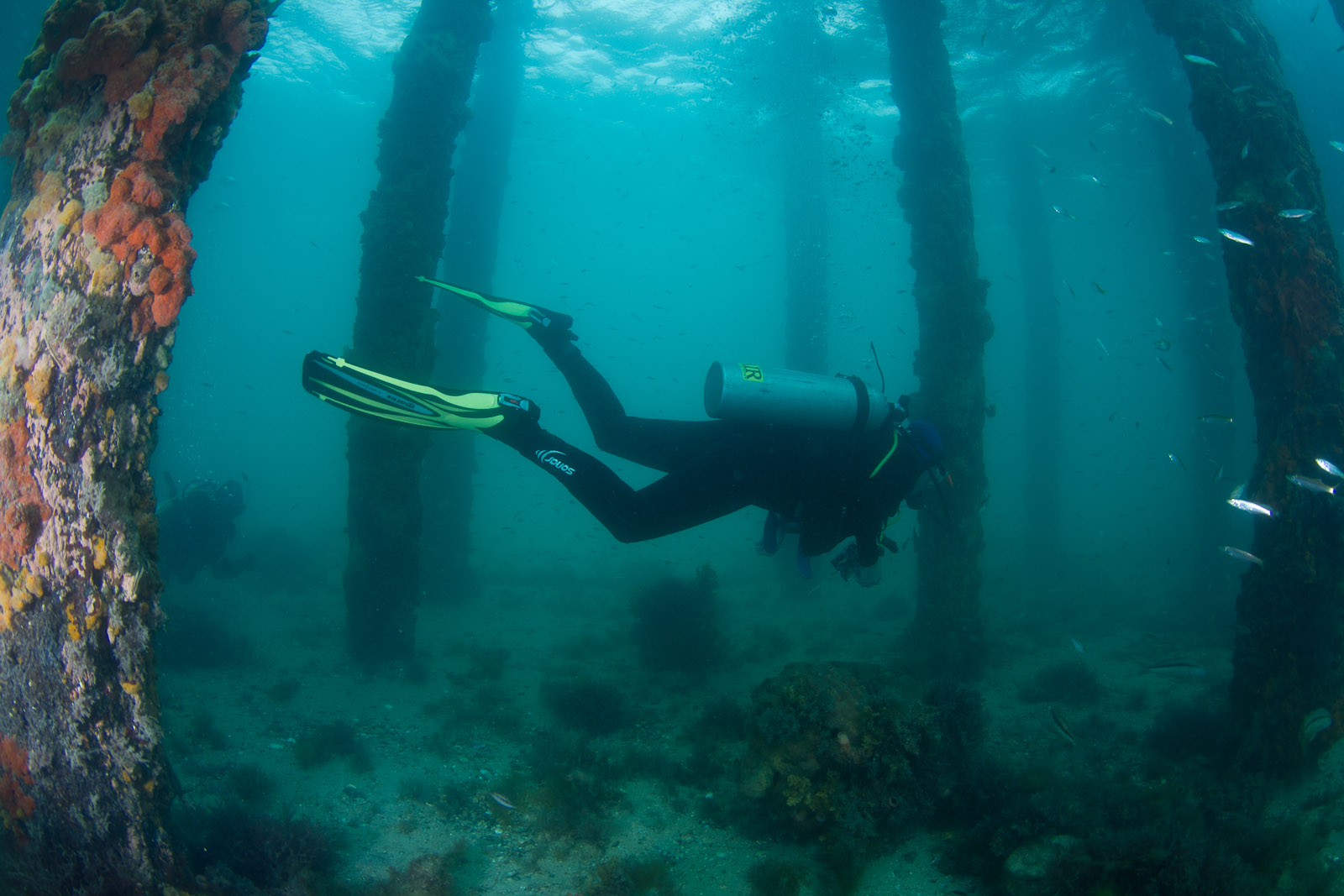
Pier Diving in Melbourne
Diving in Melbourne We are extremely fortunate that here in Melbourne there is an active dive community, and once you have dived some of Melbourne's piers, you'll see why! There are dozens of piers scattered around the shore of the Port Phillip Bay, which means plenty of dive sites to choose from. But you’ll find some of the best pier dives on the Mornington Peninsula, which is within easy reach of Melbourne City and perfect for weekend breaks Dive Conditions The majority of pier dives offer easy conditions suitable for all levels and perfect for beginners and underwater photographers. If you are new to diving we have sites that offer ideal conditions for learning - take a look at getting certified with the PADI Open Water Course HERE. Here are 4 of our favourite Pier dives we hoe to explore with you soon! Mornington Pier The closest pier to Melbourne is Mornington Pier, which is an